Showing posts with label and. Show all posts

Wednesday, March 18, 2015

Plug and play microscopy


Here are some pictures taken with my new toy, a borrowed Dinolite USB microscope. It plugs into the USB port on a laptop and has a ring of LEDs around the lens to illuminate the subject, plus a knurled focussing wheel – and that’s it. You take a picture by clicking F11 on the keyboard or by gently tapping a sensitive point on the instrument. It will take a bit of practice to become proficient but so far I’m quite pleased with what it’s delivering. This would be a useful instrument for a naturalist and would be ideal for showing your kids the miracles of the microscopic world, especially if the laptop is coupled to a digital projector, so that the images are projected onto a large screen. Next step is to borrow a netbook and see if I can run it off that, in which case it might make low-power microscopy in the field a feasible proposition. The (not very exciting) pictures are of a very young woodlouse (length about 3mm.), and groundsel flowers. On the case of the flowers, you can easily count the pollen grains at the highest magnification. The woodlouse in the picture is the common pigmy woodlouse Trichoniscus pusillus, that normally lives in woodlands but thrives in the pine bark mulch Ive used in my garden.

What are Rocks Made of and Types of Rocks For Kids

The earth is one big rock factory. According to the scientists, the earth has been making rocks for billions of years.
The earth makes three different kinds of rocks.
One kind is made from hot, syrupy liquids, deep inside the earth. Sometimes, some of this liquid rock pushes its way between two layers of solid rock—making a sort of rock sandwich. Then the liquid cools off and becomes solid, too. Sometimes, when volcanoes erupt, some of the liquid rock is pushed up out of the earth. When it reaches the earth’s surface, it cools and becomes solid.
Rock that was once a hot liquid is called igneous rock.
Igneous means “of fire.”

Granite, the hard, light-colored sparkly rock used on the outside of many buildings, is an igneous rock. And so is the black glassy rock called obsidian that some prehistoric people made into knives and arrowheads.

Granite – an igneous rock
 Another kind of rock is made out of “rock powder.” Wind and rain wear off tiny, powdery bits of rock from mountains. Rivers carry the powdered rock to the sea, where it sinks to the bottom. Over thousands of years, the bottom layers of powder are squeezed together by the weight of new layers. Slowly, the powdery bits on the bottom are turned into a layer of solid rock. Over millions of years, earthquakes and other forces may lift up the layers of new rock and they become dry land.
Rocks that are made this way are called sedimentary rocks.
Sedimentary comes from the word sediment, which means “to settle.”
Limestone and sandstone are sedimentary rocks.

Sandstone – sedimentary rock

There is also rock that is changed deep in the earth.
The heat and weight of the earth slowly change it into a different kind of rock. 
Rocks changed this way are called metamorphic rocks.
Metamorphic means “changed.”

Slate, a gray-black rock from which blackboards used to be made, is a metamorphic rock that was changed from clay.
Marble is a metamorphic rock that was changed from limestone. Most metamorphic rocks are very old. They stay buried unless erosion, an earthquake, or the birth of a mountain lifts them to the earths surface.
Marble—a metamorphic rock
In fact, all the rocks we see were made long, long ago.
The oldest rocks ever found on earth are more than three billion years old.
But the earth hasnt stopped making rocks—its making them right now.
It takes a long, long time to make a rock.

ADD LIFE TO YEARS AND NOT YEARS TO LIFE

Living Happily After Retirement

Speech by P.P.Ramachandran
(After serving in the Reserve Bank of India for forty long years, retired at the age of 60)

I am thankful to the Chembur Senior Citizens’ Association for offering me a chance to be with all of you this evening. I regret that I shall begin with a funeral reference. Since death is but part of Life I shall recount this charming story. In a tiny village in Kerala, a devout Christian breathed his last and the local priest being out of station, a priest from an adjoining village was called upon to deliver the funeral oration.

“Ladies and Gentlemen”, began the venerable pastor with the dead body in a coffin before him, “Here lies dead before me a rare human being of this village with outstanding qualities. He was a gentleman, a scholar, sweet of tongue, gentle of temper and very catholic in outlook. He was generous to a fault and ever smiling”. The widow of the deceased stood up at the end of the Hall and screamed, “O! God! They are burying the wrong man”. A similar doubt can reasonably arise in my wife’s mind about the qualities of my head and heart eloquently praised by the previous speaker. Now, I will revert to the subject allotted to me, “Living Happily After Retirement”.  Retirement is a problem peculiar to our generation. In the times of our fathers and grandfathers, retirement was not much of a problem.

There are three reasons for this.

First, Life Expectancy. Fifty years ago, the life expectancy at the age of retirement fixed at 55, was 60.  A study of Government records revealed that very few people enjoyed pension for more than five years at that time.  Most people died before sixty and consequently spending five years after retirement did not pose any major problem. Today Life Expectancy at retirement at 58 or 60, is 75 years which means half of your working life is still left after retirement. To give you an example two Senior Officers of RBI died at 93 years—35 years after retirement.

The second reason is the change in the family structure. Half a century ago most people were in a joint family. The day you laid down office, you still had a large family around you. Surely, in a large family there was always something you could do that was meaningful and made you feel you were contributing to the family. Today the family has become nuclear—husband, wife, children. By the time one retires, the children have gone away. In good old times, daughters used to get married and promptly go away. Nowadays sons get married and shift on and for First Night itself! What is left is the old couple—You for Me and Me for you. This is not particularly easy to accept and adjust to after retirement.

The third reason is the problem of “Roots.” In halcyon days, people used to have a “native place” and an “ancestral home”.  They looked forward to going there and settling down after retirement. Today except for Leave Fare Concession purposes, there is nothing left in terms of native place.  People often are confused as to where to settle.

These three problems make retirement planning a crucial item. If you have planned for retirement you can anticipate and tackle these problems. People are not accustomed to the idea of staying by themselves. If one asks an audience of prospective retirees and their wives “How many of you expect to stay after retirement with your children, hardly one hand goes up. If some husband raises his hand, his wife immediately slaps it down saying, “I’ll be damned if I am going to stay with my daughter-in-law!”  So it is a tough problem to think about old people staying—just the two of them. This makes planning all the more significant.

The most difficult problem that we face after retirement is the psychological one. When an executive retires, he is at the peak of his career—his status, prestige and financial acumen.  The moment he lays down office, all these desert him. He discovers that “Everything becomes Less and Less”.  The first thing he notices is the way his status and prestige are affected. Even at home, the retired person is no longer the important person. If he demands of his wife an early breakfast, she will promptly admonish him, “You are retired now. So take it easy. Let those employed go first !”. He is no longer “Numero Uno”. A friend of mine who was a Senior Executive in RBI was getting 500 Greeting Cards and Diaries for the New Year. After one year of retirement it dwindled to fifty and this year he got ten. Greeting cards and diaries are surely an indicator of the respect you are held in.

The most immediate problem on retirement is time-arrangement. We all have twenty four hours at our disposal, whether we like it or not. When you are a Senior Executive you work for ten, twelve or even fifteen hours and you feel “Suppose I had two hours more how nice it would be!. Life would be easier.” After retirement we have twenty four hours and nothing to do! is one thing . Result – misery and this one he likes to spread! No man wants to be miserable alone. He will make as many people miserable as he can. A man who has nothing to do will harass people around him. Turning on head the Benthamite principle of maximization of welfare—maximisation of ill-fare!.

There are two solutions to this problem. One is to continue to do the same work one was doing at the time of retirement. The first option is very convenient but where is such an opportunity for the majority? There is the temptation to wangle out an extension but this does lead to compromising principles which many succumb to regrettably.  I have seen Senior Officers accepting jobs as liaison officers and standing outside the cabin of their subordinates and seek favours from them. But how long-lasting is the solution. Extension merely postpones the problem. It crops up again quite swiftly. The second option is to do something different, i.e., option to get another job. An executive can get another job provided he is willing to sacrifice self-respect. Generally jobs are given by the previous employer’s suppliers. Cases are legion where army, navy, air force officers are caught for espionage in such employment. In commercial organizations Officers are employed to get orders and collect bills speedily from their erstwhile Employers. So you will agree that this is no solution.

All of you are aware that the Bard of Avon-- William Shakespeare wrote of the “Seven Stages of Man”.  Modern psychologists have abridged it to four and these are thus.
Before finding a girl—Spiderman
After engagement------Superman
10 years after marriage-Watchman
20 years after marriage - Doberman
After this lighter side I revert to post-retired life. The retired official is likely to fall into four dysfunctional time options.

The first is “Withdrawal”. Many retired people, the day they retire from Office withdraw from Life and within a few months they just pass away.  When you ask a Doctor he will tell you I can give a Medical term but this is case of “simple lack of will to live”.

The second time management option is “ritual”. A person can create a ritual for himself. He gets up at a specific time, does different activities at a specific time and this invariably results in misery for others if that specific time frame is not adhered to. While he has in essence nothing to do, he is trying to make his activities meaningful. This leads to a meaningless ritual.

The third option is Pastime. Many people get together and embark on a combined ritual which is called pastime. This too does not add to the meaningfulness of life.

The last option turns out to be even mischievous.  It is playing games— not physical ones like badminton, tennis but psychological ones where you try to manipulate people, get into their problems, complicate them and generally enlarge the tension around you. Many a respectable person indulges in this and creates problems where none existed.

The alternative to these are Functional options. The first is become a Consultant. Lurking inside every executive is a Consultant. But for this considerable expertise is required. All are not Consultants.

The second option is to start your own Business or industry. But this calls for entrepreneurial qualities which an executive may lack. Many are the cases where lakhs of rupees have turned into thousands!.

The third option is to involve oneself in professional activities. For this one must build up one’s position even before retirement. Many cliques operate to prevent outsiders from encroachment.

The fourth is to get into spiritual activities. While nobody is required between you and God, nowadays, we find more and more godmen, swamijis, pseudo Gurus some even US returned. There is a temptation to follow some Swamiji or even become one yourself. This is a very slippery slope. Beware –there are more hoaxes in the religious field than anywhere else!.

The last and most meaningful option is to cultivate a Hobby. Use your creative abilities and do something that you enjoy doing. You should start this even while in service.

We live in three Boxes. First is the Box of Learning, which starts from birth and goes on till 20 plus. Second is the Box of Work which commences at 20 plus and goes on up to 58 or 60—the age of retirement. Third is the Box of Leisure. When we are in the Box of Work what is significant is Status, Prestige, Power—all these we aspire for and it is what we get from Life. The more we get ---the happier we are. The day we retire we move into Box 3—the one of Leisure.

If we have to enjoy this we have to change our psychological position and appreciate creativity, autonomy and integrity. When you were a small child of two or three did status or prestige or money mean anything?  What you wanted was autonomy, creativity. A child is always creative. It enjoys creativity. One example. When visitors come you ask your child, “Sing Twinkle Twinkle Little Star”.  She will not sing. You shout at her. You tell your visitors proudly she is three only and knows Twelve Nursery songs. The moment the guests are gone and your servant comes for cleaning, your daughter will sing to her all the twelve songs. The child has its own values!

By the time we enter the Box of Work values change. We are taught not to respect our autonomy but fall in line—conformity is the rule.  If the son plays the violin his Mother will come and tell him, “Playing the Violin now?. Study now. Math’s is very scoring. If you get centum admission to IIT is easy. Life is competitive, dear son.” When we enter the Box of Leisure values change. Your psychological position has to be changed. New values of creativity, integrity and autonomy emerge. Hobbies are an excellent way of getting Leisure Value. Everybody must identify his hobby that he can enjoy. Not bother about Power, Prestige and Status. An individual can live in one box only or interchange or combine the boxes. You can have learning, work and leisure together. One can even take up a hobby that is financially productive. As time passes one learns.

The real problem of retirement is that people refuse to face the problem. The mantra is “Let us cross the bridge when we come to it.” This is not correct. Since we live in three Boxes we must prepare ourselves for crossing from one to the other. Structuring our time is the prime requirement. In the beginning you are contributing to Value. Think of Transfer Value. After retirement you can think of Leisure Value. Develop good hobbies which incorporate your creativity, autonomy and integrity. I have taken to Letter writing. (Rajaji , Kalam and H R F Keating.)

You will lead a happy life. Retirement is not adding “Years to your Life but adding Life to your Years”. Retirement is not a calamity but an opportunity. I shall advert to some basic qualities one must cultivate. There are two ways to look at every situation in life. Is the Cup half empty or is the cup half full. One man was not worried about his becoming bald. He declared “I have less hair to comb!”  Another man in identical situation moaned, “I have more face to wash!”  Always remember that you are loved, even when it does not seem like it. Believe in yourself and your values. Don’t sell out when things go wrong. Don’t let anything get you down. Always bounce back. Set goals for your future and never settle for anything less.

Realise that there are others in this world with bigger problems than you.  Appreciate the good things of Life. Sunrise, Sunset, Flowers, Birds. Be thankful for the good times you have with your loved ones. Spend more time with your family and friends. Laugh as much as you can. Appreciate the simple things of Life and don’t get caught up in the material things of life. Be an Optimist and see the Cup as being Half Full. Before long your attitude will rub off on others. You can make the world a better place to live by simply by making yourself a happier person.

You will permit me to conclude with an allegorical story. First God created the Cow and said, “You must go with farmer daily to the field all day long and suffer under the Sun, have calves, give milk and help the farmer. I give you a span of sixty years.” The Cow said, “That’s surely tough. Give me only twenty years. I give back forty years.” On Day Two God created the Dog and told him, “Sit all day by the door of your house and bark at strangers. I give you a span of twenty years.” The Dog said, “Too long time for barking. I give up ten years.” On the third day God created the Monkey and said to him, “Entertain people. Make them laugh. I give you Twenty years.”  The Monkey said to God, “How boring, Monkey tricks for twenty years. Give me only Ten years”. Lord agreed.

On the fourth day God created Man. He told him, “Eat, sleep, play, enjoy and do nothing. I will give you twenty years.”  Man said, “Only twenty years. No way. I will take my Twenty and give me the Forty the cow gave back, the Ten that the Monkey returned, and the Ten the Dog surrendered. That makes eighty. O.K?” 

O.K said God. That is why for the First twenty years we sleep, play enjoy and do nothing. For the next forty cow-years we slave in the Sun to support our family. For the next ten-monkey years we do tricks to entertain our grandchildren. And for the last Ten-dog years we sit in front of the house and bark at everybody.

Thank You All.

Tuesday, March 17, 2015

Penny and Her Song

Kevin Henkess picture books were well-thumbed in our house back when my daughter was a child. She especially loved Julius, the Baby of the World, which features Lilly, a mouse child who does not take well to the arrival of a baby brother. As Lilly puts it: "If he was a number, he would be zero." I spent hours reading this story to my daughter, and later, when she was school age, shed laboriously copy the text in her childish hand. What I found amazing about her dedication to this work of sibling rivalry is that shes an only child.

Fast forward twenty years. Penny and Her Song is Henkess latest book and its an easy reader. Penny, the storys young heroine is, like Lilly, a mouse child, but with two baby siblings. While this would have driven Lilly around the bend, Penny takes their existence in stride. Where Lilly was boisterous and outrageous, Penny is quiet and resourceful. She comes home from school bursting to share her song with her parents. Except she cant. The babies are asleep. Now Lilly would have thrown a tantrum on the spot. Not Penny. She goes to her room and attempts to sing the song to herself and to her glass animals. Neither does the trick. She needs a proper audience. After dinner Penny finally gets her chance and after listening, her parents and the babies join the show, singing until they are all tuckered out and ready for bed.

When I started the story I fully expected Penny to act up when she didnt get her way. How refreshing that Henkes, without moralizing, shows his readers the benefits of using self-control and patience. Short, direct sentences combined with Henkess always delightful illustrations give us a winning easy reader children will want to read again and again. And, who knows, maybe even copy the text word for word.

Watch Kevin Henkes as he talks about Penny.


Penny and Her Song
by Kevin Henkes
Greenwillow Books, 32 pages
Published: February 2012

Sunday, March 15, 2015

Metaplasia Dysplasia and Anaplasia

Metaplasia (Greek: "change in form") is the reversible replacement of one differentiated cell type with another mature differentiated cell type.

Dysplasia (from the Greek δυσπλασία "malformation", δυσ- "mal-" + πλάθω "to create, to form"), is a term used in pathology to refer to an abnormality of development.[1] This generally consists of an expansion of immature cells, with a corresponding decrease in the number and location of mature cells.

Anaplasia refers to a reversion of differentiation in cells and is characteristic of malignant neoplasms (tumors). Sometimes, the term also includes an increased capacity for multiplication. Lack of differentiation is considered a hallmark of malignancy.

Wednesday, March 11, 2015

Dagnan Bouveret drawings and landscapes


Portrait Bust of Piero di Lorenze de Medici. 1873. Pencil and charcoal on paper
Study of Pensive Man. Pencil and red
crayon on paper
L’Adoration des Bergers. 27x19cm
tude de Visage Feminin. Late 19th
century. Graphite on paper. 11x14cm
Head of a Woman with Eyes
lowered
57x41cm. Pencil and crayon on paper
Manches et col Blanc
Portrait dune Femme aux Longs Cheveux
Black crayon on blue paper. 36x31cm
Head of the Christ (study for via dolorosa). 1925
Chalk, sanguine and pencil. 22x18cm


Woman Praying (study for via dolorosa). 1927. Chalk drawings on paper

Saint John the Evangelist
Black and colored
crayons. 42x30cm
Le Sauveur 64x66cm
Handstudy. 1897. 19x26cm
Head of Woman with Hat
On. 13x9cm. Pencil on
paper

La Vaccination des Enfants. 19x26cm
Studies for Seated Breaton Women
Orpheus Sorrow. 1876.
Prepatory drawing on
tracing paper
Seated Breton Woman
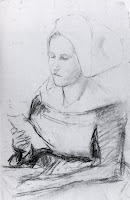
Seated Woman Holdin
a Letter. Study for
Breton Women Seated at a Pardon
Study for Edelfelts Portrait
Le Violoneux.
32x22cm
Study for The Last Supper (head of the
Saint John)
Study for The Last Supper (head of disciple).
1895. Charcoal with colored pencil on paper
En Cantara. 1888. Oil on canvas.
26x23cm
Self Portrait
The Mill at Corre. 1878. Oil on panel.
16x22cm
Willos by a Stream. 1908. 65x 81cm

Tuesday, March 10, 2015

Weird and Bizarre Eggs Double Yolk Yolkless and Red Yolk Egg


Eggs are among the major source of affordable protein needed by humans.

Double-yolk, yolkless and red yolk eggs are all forms of egg abnormalities.


Most of us eat egg but it is very seldom that we encounter abnormal eggs such as double-yolk, yolkless and red yolk eggs. In my lifetime, I had only encounter double-yolk egg twice. The first one was when I am still in elementary and the second was last week. I had seen a yolkless egg once and I don’t remember seeing a red yolk egg.


One of the most unusual forms of egg is the double-yolk egg. There are several reasons for the occurrence of double-yolk eggs:

  • it occurs when ovulation occurs too rapidly
  • it occurs when one yolk becomes joined with another yolk
  • it may be the result of a young hen’s productive cycle not yet being synchronized
  • hybrid breeds of hens also produce double yolk eggs by default.
  • some hens will rarely lay double-yolk eggs as the result of unsynchronized production cycles.


A double-yolk egg is usually longer and thinner than an ordinary single-yolk egg. Double-yolk eggs usually only lead to observed successful hatchlings under human intervention, as the chickens interfere with each other’s hatching process and die


The second form of egg abnormality is the red yolk egg. This kind of egg has an extremely thick red yolk.

The third form of egg abnormality is the yolkless egg. An egg without a yolk is called "dwarf" or "wind" egg. This kind of egg since it contained no yolk and therefore can’t hatch. 


See also

World’s Largest Eggs Ever

World’s Most Colorful and Beautiful Ducks

World’s Most Colorful and Beautiful Ducks

A list of the most brightly colored ducks in the world.
Quantcast
Cartoon characters Donald Duck and Daisy Duck are the two most popular ducks in the world.  Now, meet the most brightly colored and pretty ducks. Most male duck species are much more colorful than females.
1.Mandarin Duck (Aix galericulata)

Image Source
Undoubtedly, the male Mandarin Duck is one of the most beautifully colored ducks of all.  This medium- sized perching duck with striking coloration has a red bill, large white crescent above the eye and reddish face and whiskers.

Image Source
The breast of this lovely duck is purple with two vertical white bars with two orange ‘sails’ at the back. The female which is not as colorful as the male is similar to female Wood Duck, with a white eye-ring and stripe running back from the eye, but is paler below, has a small white flank stripe, and a pale tip to its bill.

Read more...

Monday, March 9, 2015

9000 Year Old Northern European Mummies of Nevada and California

9000 Year Old Northern European Mummies of Nevada and California

   Mummified human remains have been discovered in eastern California and Nevada. The remains in Nevada are from Lovelock Cave.DNA results of the Nevada skulls show they originated from Norway. The  Piaute Indian has a legend of  red haired giants that once inhabited these same regions.


A giant mummified woman who was 6 feet 8 inches tall that was discovered in the Yosemite Park in California. Are these the same people? 

HMH Fuse and the future of K 12 mobile education on the iPad


Last September we wrote about a fascinating project that, if successful, may ring in the future of digital curricula for K-12 education. Houghton Mifflin Harcourt, a major publisher of textbooks with an abiding interest in technology, embarked upon a large scale pilot project in digitaleducation.
As soon as their new Holt McDougal Algebra 1 textbook was finished, it was decided to re-imagine it as an iPad app named HMH Fuse Algebra 1. The app would include exactly the same content as the 950-page book, but it would also contain over 400 videos, animations, a graphing calculator, multiple presentation methods and numerous other features. John Sipe, the general sales manager of HMH, blueprinted what he wanted the app to be and worked with developers to bring it to fruition.
The free app, which weighs in at 141 MB, only gives you a taste of how it all works, but it doesnt include any course content. Seeing that requires a US$59.95 in-app purchase. Loading all the content takes up a whopping 4-6 GB of space, but chapters and videos can be downloaded, erased and reloaded at any time.
HMH took this quite seriously and poured some major money into a full-year pilot project; four California school districts were chosen, and teachers were asked to volunteer to teach a number of classes using the textbook and other classes using the app for the entire school year. HMH wanted to measure if students tested better using the app over the textbook and explore attitudinal changes in both teachers and students. All classrooms using the app needed to be Wi-Fi enabled. There was no intention of replacing teachers or turning them into mere facilitators in the HMH Fuse classes. Sipe and HMH wanted to see if delivery methods affected learning, and if so, how?

The Pilot Project

HMH bought and donated 400 64 GB Wi-Fi+3G iPads to schools in the Long Beach, Riverside, Fresno and San Francisco unified school districts. Eighth grade students in the test classes were loaned the iPads. Another 600 students took classes using only the textbooks. The same teachers taught both the test and control classes.
There was no possibility of front-loading classes with the better students getting the iPads since HMH had no control over which classes would be using the textbook or the app. The makeup of classes were determined as they always had been -- through standard class rosters provided by the school districts. The teachers who volunteered to take part knew that this would be more work than usual, and the technical capabilities of these teachers varied widely -- most of them had never touched an iPad. One day of iPad training was provided by HMH; some teachers had as little as three hours of instruction, and then HMH went away. The only contact HMH had with the schools and teachers was to provide technical assistance. Assistance was also available from representatives in the Apple educational division.
Empirical Education, a large testing company, was employed to conduct the study; it started in September of last year and will finish at the end of the school year this June when data will be compiled and presented to HMH. The major intentions were to see how the impact of multimedia and multiple presentation methods affected student perception, achievement and usage trends.
Outside of test scores, Empirical collected information on topics such as how many times students watched a video or took a quiz. Teachers were asked to periodically complete qualitative surveys on their reactions to the app, with questions ranging from how using the app affected their teaching to their impressions of student reactions. The main thrust, however, was on the students who comprise the target market.
The study began with all 1000 students using the textbook for one month since the HMH Fuse Algebra app wasnt completed until early October. All the content, including multimedia components, was available to the textbook classes on a site provided by HMH, and textbook class teachers were allowed to use all of these assets by projecting them to their classes as often as they liked. Just as students get to take home their textbooks for homework, the iPads were taken home every night by members of the HMH Fuse classes. It was left up to the teacher whether to lock down the iPads and only allow use of HMH Fuse, or to open them up to be general-purpose devices.
After tracking site usage and finding that students werent visiting anywhere inappropriate, most teachers left the iPads open, and students were encouraged to download apps and music for their personal use. This was often decided after discussions took place with teachers, parents and students. A component of the study was a students sense of ownership of the iPad.
Each iPad contained a unique identifier that was mapped to an individual student. When a test or quiz was taken, the results were immediately transferred to a teacher reporting site that provided not only the grades for a quiz or test, but also how the students fared on each relevant skill set in the assessment. In addition to assisting the teachers, this data was also harvested for the pilot study.

How One Teacher Conducted Her Classes

I interviewed Jeannetta Mitchell, a math teacher at the Presidio Middle School in San Francisco, who is currently teaching three textbook classes and one HMH Fuse class. She seemed quite impressed with the app and the effect it had on her students.
She was always interested in technology, but she didnt own an iPad or know much about them. Since a number of her students were quite familiar with varying technologies, the students and teacher learned together. "They all became teachers on how to use it." If there was a problem she could contact HMH or Apple, who were both quite responsive. HMH provided technical support but didnt assist regarding the course content since doing so would muddy the findings. Although everyone in class had their own iPad, she decided to put students in groups of two. If one person couldnt figure something out, the other usually could. It seemed to work very well.
It was important to the study that the pacing of the course be the same for all classes, so each class session, whether textbook or iPad, concentrated on the same course content. No one was allowed to get ahead. The "neat" factor and novelty of using iPads quickly wore off. By the second grading period it was gone. Surprisingly, there was no backlash from students in the textbook classes over not getting iPads. The videos embedded in the app were shown twice a week to the textbook classes using the HMH support site. Videos in her iPad class were only projected once a week, but students had instant access to watching them as many times as they liked while the textbook students could review them from home using the support site. Everyone in her textbook classes had computers at home, but no computers were used in school during class time.

Teacher Reactions to the HMH Fuse Class

Mitchell really liked having a graphing calculator built into the app that was always available. It was an advantage that "students dont have to buy a graphing calculator." Although one was available from the support site for textbook class homework, that was far less convenient and precluded students that hadnt bought a calculator from following along to immediately see how changing a variable would affect the slope of a curve.
Often in her classes she would have students try out a problem, and then shed ask for a show of hands of how many got it right or wrong. Eighth-grade students dont like to be singled out, so the number of hands that went up never matched reality. The HMH Fuse app contains a built-in polling function that she called a "teacher clicker." In the iPad class, when asked about their success on a problem, students could anonymously tap a button which recorded instant results that she could see and have projected. The anonymity of this system caused the students to answer honestly. Using the immediate information provided, it was made apparent what was well learned and what had to be re-taught. This was a great time saver.
HMH Fuse uses multiple presentation methods. When a video plays, the text being spoken appears below it. Under that is a window that shows bullet points of the main concepts. To the right is a larger section titled "Lesson Tutorials" where the problem under discussion is visually worked out step-by-step. Below that is another display that defines the meaning of words used in the example.

Since its been widely proven that some people learn better through sound, some through visuals and others through reading, this multiple methods approach was quite helpful in having students understand concepts quicker than just using going through the problem on the board at the front of the class. To support this, there is a "Notes" function, available anywhere in the app, where a student can record the teachers voice, write some information, and save a marker to the note in just the right place for later retrieval. This proved to be a great help and made the app more personal for each student.
"View in Motion," which displays a step-by-step method of problem solving, was also quite useful.

This option starts with a problem, and a downward swipe on the right goes through the solution one step at a time. Swiping upward takes you back a step. This programmed approach was a major advantage of HMH Fuse. Being able to pause a problem in progress was quite effective, as was the ability to try out a problem and get the answer on the same screen without needing to flip to the back of the book to find the answer. According to Mitchell, HMH Fuse is "much more student- and teacher-friendly" than using the textbook.

Student Reactions

Mitchell found that the students in the iPad class were more motivated than those in the other classes. She thought that this might have been due to the difference in student perception of being a few chapters into the book and realizing that another 800 pages need to be completed, while the iPad class only saw what was relevant and didnt know that there was another ton of content to finish.
The iPad students didnt give up as frequently and wound up being more focused on the task at hand both in class and in their homework. Not seeing how little they had accomplished near the start of the year was quite motivating to students in the test class. According to Mitchell, the iPad class students were far less intimidated by the content, and "they do better because they think they can do this." This attitudinal change wasnt apparent in the textbook classes. Students in those classes showed no change in attitude or motivation and just demonstrated a continuation of previous behavior. Mitchell found that one of the things the iPad wont do is to provide motivation by itself. "It does affect them most of the time, but its not a magic wand."

Initial Results

Although the pilot wont be finished until the end of the school year in June, and the results wont be made known to HMH until a few weeks later, some results were leaked to The Press-Enterprise, a Southern California newspaper. At the Amelia Earhart Middle School in the Riverside California district, two teachers have been using the HMH Fuse app to teach two classes. In a recent district wide test, the students in the iPad courses demonstrated a proficiency rate of 90.5 percent while the students in textbook classes scored only 60 percent. Although not conclusive, this is good news for HMH.

The Future of Mobile Curriculum Design

If this test proves successful, HMH Fuse will be become a brand for all Houghton Mifflin Harcourt mobile curricula. The second project, HMH Fuse Geometry, is already in the App Store. It contains the first chapter of content. Not including content in the Algebra app was a mistake, according to HMHs John Sipe. The road map includes an Algebra 2 app due to be released in late spring to allow institutional purchasing for the following school year.
The intention is to expand out of math and cover other subjects. Currently HMH has a partnership with The History Channel that can provide a wealth of assets for tackling a history curriculum. The apps will be sold to both school districts and parents of students who are home schooled, which is an increasing market. Of course, individual in-app purchases wont contain the communication and data collection capabilities of the apps in schools. The pricing will be set to be attractive to all concerned. For example, the Algebra 1 paper book used in the pilot project sells for $74, while the in app purchase of the book costs $59.95. School districts will get a 30 percent discount for volume buys.
The initial results are anecdotal at best, but it looks good, and since the HMH Fuse Algebra 1 app is the first complete curriculum developed for the K-12 market with everything else to date being geared toward higher education, HMH Fuse may well be the face of in-school mobile curricula. According to Sipe, the iPad is currently the perfect delivery vehicle.
The following video shows the introduction of the pilot project to students at the Amelia Earhart Middle School. Its quite long, but if you jump about nine minutes in, youll see Dr. Edward Burger, one of the authors of the textbook and app, introducing and demonstrating HMH Fuse Algebra 1.